Dynamic Discs Lucid AIR Escape Fairway Driver Golf Disc - 145-159g Review (2026)
Updated September 14, 2026 · Research-based review
Our verdict
The Lucid AIR Escape at 145 to 159 grams is built for players who need a fairway driver they can actually get airborne, using Dynamic Discs air infused Lucid plastic to cut weight without losing the Escape's proven straight flight. Expect easy glide over raw power, and slightly less wind resistance than a full weight Escape.
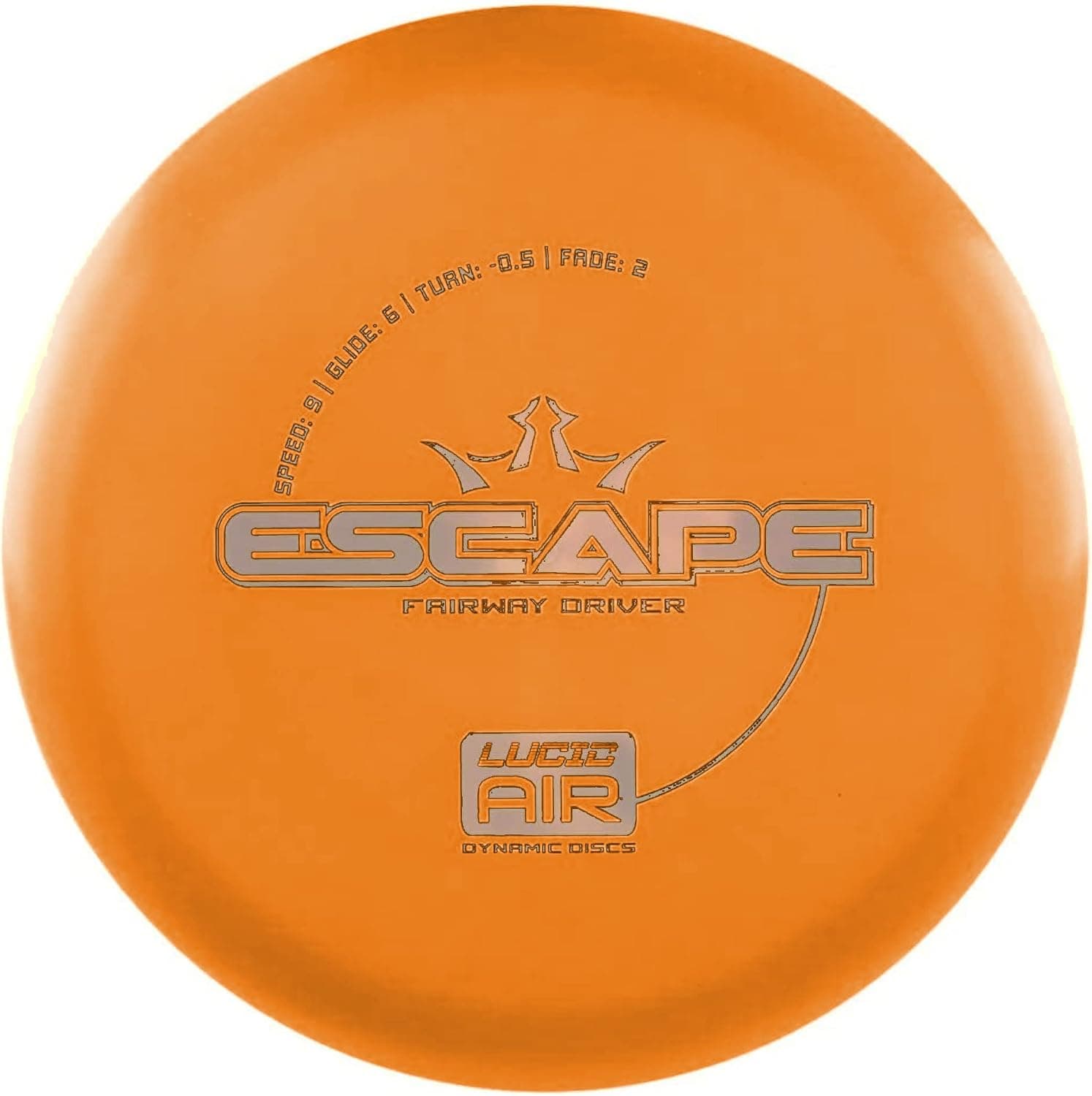
Dynamic Discs' Lucid AIR Escape at 145-159g, a popular fairway driver made light for easier distance at low speeds.
Price range: See on Amazon
What we liked
- + Escape is a proven, straight-flying fairway driver that suits many players
- + Lucid AIR plastic keeps the weight low while staying durable over time
- + 145-159g range helps slower arms reach the glide of a heavier Escape
Trade-offs
- - Light AIR copies float and can drift badly when wind picks up
- - Lighter build can feel less stable than a standard weight Escape
Who this weight of Escape suits
The Escape has been one of Dynamic Discs most trusted fairway drivers for years, and the Lucid AIR version exists specifically for players who cannot generate enough arm speed to make a 170 gram plus disc fly as designed. Dropping the mold to a 145 to 159 gram range through Dynamic Discs air infusion process means the same rim shape needs far less force to reach full extension, which is why it gets recommended so often for new players, kids, and throwers rebuilding form after an injury. Higher speed throwers can still use it, but they will usually notice the disc floating and finishing early rather than carving the long, controlled fade a heavier Escape produces. Anyone searching for a first fairway driver that turns effort into distance, rather than raw arm speed into distance, is the target buyer here.
What the flight numbers and plastic mean
The Escape carries published flight numbers of 9 speed, 5 glide, -1 turn and 2 fade, putting it toward the faster end of the fairway class with a gentle, controllable finish rather than a hard slam. Lucid AIR is Dynamic Discs lightweight line, made by working microscopic air pockets into the standard Lucid blend so the disc weighs less without changing the outer shape or rim profile. That keeps the flight numbers consistent with a standard Escape, it just takes less speed to unlock them. Lucid plastic itself is a semi translucent, grippy material that sits between the brand's budget and premium plastics, so it holds up to regular course wear while still giving a comfortable, tacky grip in the hand, including in damp conditions.
Throwing and caring for a lightweight driver
Because this weight class is so light, it reacts more to wind and off axis torque than a standard Escape, so a clean, flat release matters more here than with a heavier disc. Most players use it for shorter fairway shots, wooded lines, or as a step up from a midrange once they are ready for more speed, rather than for maximum distance drives. Lucid plastic resists cracking and flat spotting reasonably well for its price point, and a quick wipe after wet rounds keeps the grip from going slick with course dirt. Because the AIR process trades some rim rigidity for the lighter weight, avoid leaving it somewhere it could warp, such as a hot car dashboard, since a lighter shell can deform faster than a standard weight disc under heat.
Where it gives ground to rivals
Inside the same low arm speed guide, the Escape ranks above discs like the Prodigy AIR Spectrum F5, which trades some of the Escape's control for a more understable, turnover heavy flight that beginners sometimes prefer for maximum distance off the tee. The Latitude 64 Opto AIR Sapphire sits close in score and leans more toward a true distance driver shape, so it can outdistance the Escape once a player's speed increases, while the Escape stays more accurate for fairway and approach shots. The trade off with any AIR line disc is stability under pressure, a hard forehand or a strong gust can knock the flight off course more easily than it would a standard weight Lucid Escape, since there is simply less mass resisting the wind.
Bottom line
For a player who struggles to get standard weight fairway drivers to finish their flight, the Lucid AIR Escape at 145 to 159 grams solves that problem directly while keeping the dependable, straight to fade line that made the Escape popular in the first place. It earns our score of 8.6 out of 10 mainly on fit for the job and value, since it is an affordable, focused answer to a specific and common problem. Players who already generate strong arm speed should skip this weight band entirely and buy a standard or heavier Escape, since the extra glide and lighter build will make the disc harder to control rather than easier.
Frequently asked questions
What arm speed is the Lucid AIR Escape best for?
It is aimed at slower arm speeds, including new players and kids, since the lighter weight needs less power to reach the Escape's full glide and finish.
Does the lighter weight change the flight numbers?
The published flight numbers stay 9, 5, -1, 2, but a lighter disc is more affected by wind and off axis throws than a full weight version.
Is Lucid AIR plastic as durable as standard Lucid?
It holds up well to normal course wear and keeps a grippy feel, though the air infusion trades a bit of rim rigidity for the lower weight.
How does it compare with the Prodigy AIR Spectrum F5?
The Spectrum F5 is more understable and turns over more readily, while the Escape holds a straighter, more controlled line for players wanting accuracy over maximum distance.
Prices change often, so check the current price and availability on Amazon.
Check price on AmazonDisc Golf Nest may earn a commission from the link above.