Latitude 64 Opto Line Diamond Light Fairway Driver Golf Disc - 145-159g Review (2026)
Updated September 14, 2026 · Research-based review
Our verdict
Latitude 64's Opto Line Diamond is an understable fairway driver built for players who have not yet developed much arm speed, including juniors and beginners, and its light 145 to 159 gram weight helps a smooth throw carry real distance. It loses accuracy in wind and turns over too far once a thrower's power increases.
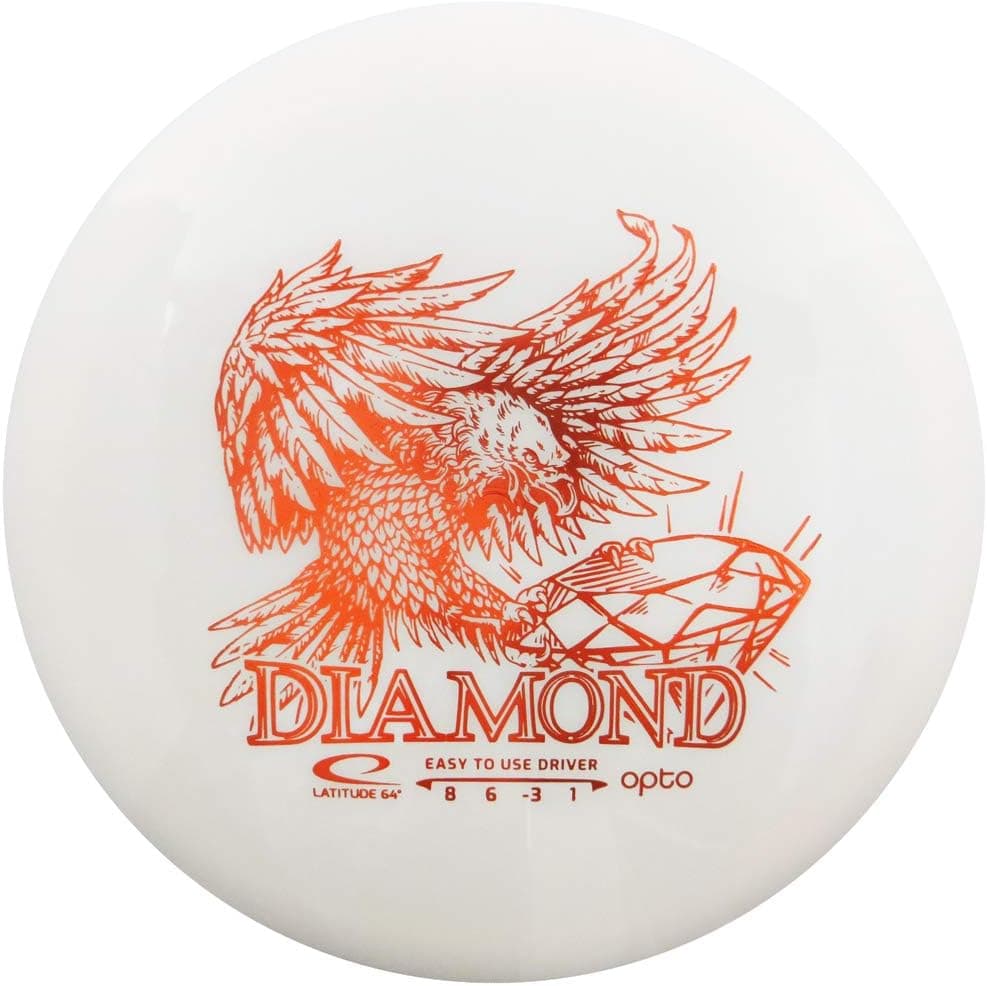
Latitude 64's Opto Line Diamond, a very light understable fairway driver designed for players with low arm speed.
Price range: See on Amazon
What we liked
- + Diamond is purpose-built for easy distance with little power
- + 145-159g weight lets juniors and beginners get it up to speed
- + Opto plastic stays durable despite the lightweight build
Trade-offs
- - Very light weight makes it hard to control on windy days
- - Stronger throwers will overpower it and turn it over too far
Who the Diamond is built for
Latitude 64 designed the Diamond as an entry point fairway driver for players who do not yet generate much arm speed, including junior players, beginners and adults easing into the sport. Its understable flight numbers and light 145 to 159 gram weight range mean the disc needs comparatively little power to reach full flight, so newer throwers get distance and glide that a heavier, more overstable driver would deny them at the same swing speed. It is a poor match for players who already throw fast and flat, since that extra power will turn the disc over past its intended line rather than let it finish with the gentle fade Latitude 64 built in. Anyone shopping for a single first fairway driver that rewards a smooth, developing throw rather than raw power should put the Diamond on their short list.
Flight numbers, plastic and dimensions
The Diamond carries flight numbers of 8 speed, 6 glide, -3 turn and 1 fade, a combination Latitude 64 markets as an easy to use, understable driver that flips up and flies straight, or even turns gently right for a right handed backhand throw, before finishing with a soft fade. This listing is molded in Opto Line plastic, which Latitude 64 describes as a premium, translucent blend chosen for its resilience and firm, consistent grip, and the disc is made in Sweden. It measures 21.1 centimeters across with a fairly slim 1.8 centimeter rim thickness, dimensions that make it easier for smaller hands to grip cleanly. The mold is PDGA approved for tournament play, and this listing ships in the lighter 145 to 159 gram range rather than the heavier weights some other Diamond plastics offer.
How it throws for different arm speeds
For the beginner and junior players this disc is built for, the light weight and high glide combine to turn even a modest, developing throw into real distance, with the disc holding a straight to gently right turning line before settling into its fade near the end of flight. That same light weight becomes a liability in windy conditions, where the Diamond can get pushed off line more easily than a heavier, more overstable disc, so calm days suit it best. Stronger throwers who already generate real speed will find the disc turns over further than intended and can finish flat or even continue turning past a comfortable line, which is exactly the behavior that makes it a poor fit once a player's arm speed grows past the beginner stage.
How it compares with other beginner drivers
Among discs aimed at newer players, the Innova Champion Valkyrie is a faster, more overstable distance driver that suits throwers who already have some power and want a disc that holds its line rather than turns over, a different design goal than the Diamond's easy turnover flight. The Westside Discs VIP AIR Underworld takes a similarly lightweight approach to the Diamond but in Westside's own plastic blend, giving buyers an alternative if they prefer that brand's grip and durability profile. Both remain reasonable choices, but neither changes the core case for the Diamond: it is specifically tuned for low power throws, and players who want a driver that performs the same way regardless of arm speed should look at a stable or overstable mold instead of any understable beginner driver.
Verdict and who should choose differently
At our score of 8.9 out of 10, the Diamond earns its place as a dependable first fairway driver, pairing an easy, understable flight with durable Opto Line plastic and a weight range built for players who have not yet developed a fast arm. Choose it if you are new to the sport, coaching a junior player, or simply want a driver that turns a smooth throw into real distance without demanding power. Choose the Valkyrie or a similarly overstable disc instead once your arm speed increases enough that the Diamond starts turning over past your intended line, and expect to swap it for a straighter or more stable mold as your distance grows. It is not the disc to reach for on a windy day regardless of skill level.
Frequently asked questions
What are the Diamond's flight numbers?
Speed 8, glide 6, turn -3 and fade 1, making it an understable, easy to throw fairway driver.
What weight does this listing ship in?
This Opto Line Diamond ships in the 145 to 159 gram range, lighter than the disc's full weight options, which suits lower arm speeds.
Is the Diamond good for experienced throwers?
Not usually. Faster arm speeds tend to turn the disc over past its intended line, so experienced players generally get more consistent results from a stable or overstable driver.
Does the Diamond handle windy conditions well?
No, its light weight and understable flight make it more sensitive to wind than a heavier or more overstable disc, so calmer days suit it better.
Prices change often, so check the current price and availability on Amazon.
Check price on AmazonDisc Golf Nest may earn a commission from the link above.