Prodigy Disc 400G D1 Overstable Distance Driver - 170-174g Review (2026)
Updated September 14, 2026 · Research-based review
Our verdict
Prodigy's 400G D1 suits disc golfers with real arm speed who need a driver that holds a straight-to-fading line into wind. The 400G plastic grips well when wet. Slower or newer throwers will struggle to get it to open up and should look at an understable disc instead.
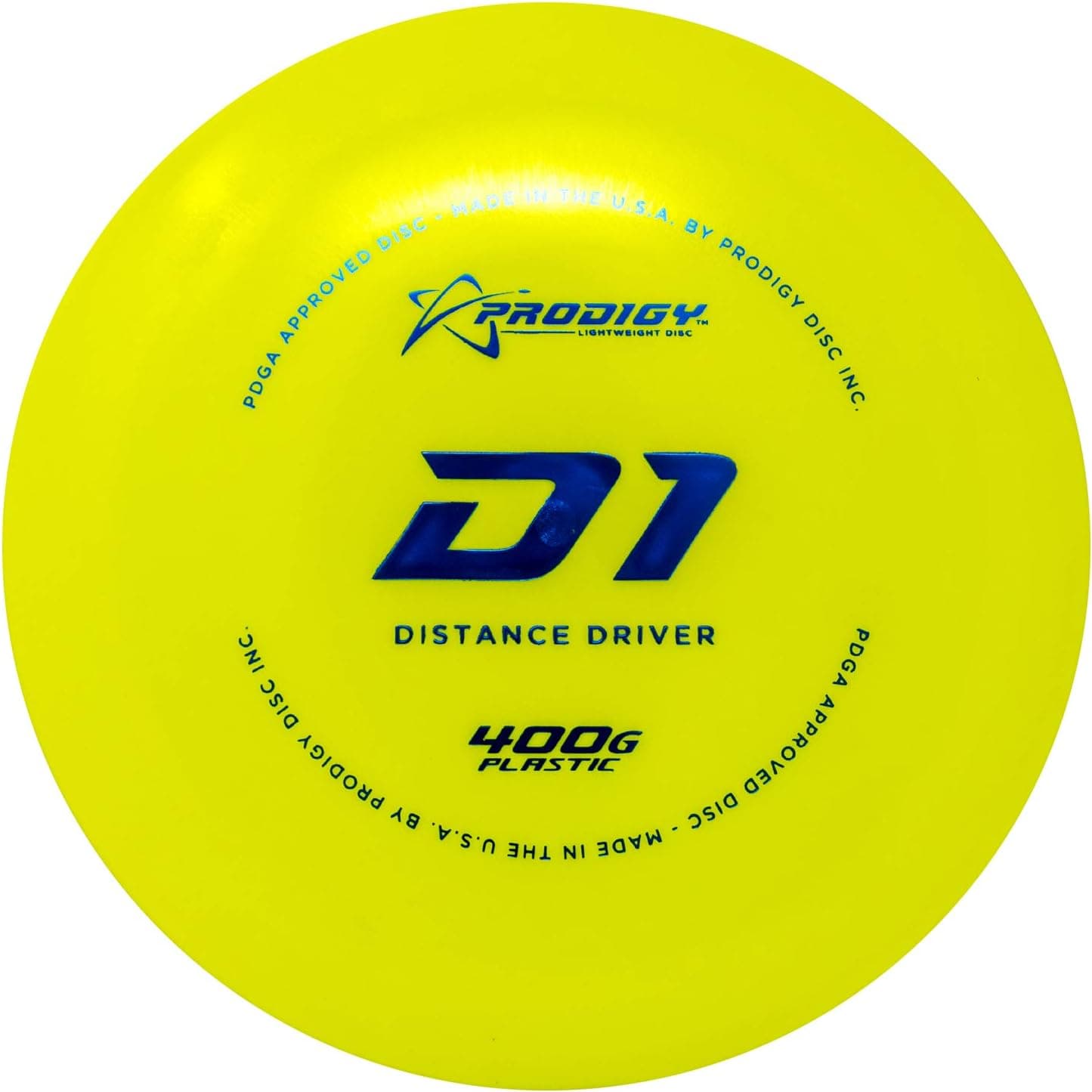
Prodigy's 400G D1, an overstable distance driver in grippy 400G plastic built for power and wind control.
Price range: See on Amazon
What we liked
- + D1 is Prodigy's overstable workhorse for long, fading drives
- + 400G plastic blends grip and durability, great for wet or sweaty hands
- + 170-174g weight is steady in wind and consistent on forehand shots
Trade-offs
- - Overstable flight shortens distance for players without strong arm speed
- - Low-profile Prodigy rim feels different from rounder Innova drivers
Who the D1 actually fits
The D1 is built for intermediate to advanced throwers who already generate enough speed to make an overstable driver flatten out before it fades. Prodigy lists the D1 at 12 speed, 5 glide, 0 turn and 4 fade, so there is no turn phase to lean on for extra distance. Players with a fast, clean release get a flight that holds a hyzer or goes dependably straight into a headwind, which is exactly why forehand throwers and wind-course regulars reach for it. Newer players without much arm speed tend to see the disc dive left early on a right-hand backhand throw, since there is nothing pulling it back to flat. If your drives usually finish short of 300 feet, a more understable Prodigy mold in the same plastic will be easier to control and more rewarding to throw.
The specs in plain English
Speed 12 means this disc needs a fast arm to flatten out at all, glide 5 is moderate so it will not float forever once it slows down, 0 turn means it will not flip over and go anhyzer even on a hard throw, and 4 fade is a strong, dependable hook back to the left at the end for a right-handed backhand. Prodigy's spec sheet puts the diameter at 21.1 cm with a 2.3 cm rim width and 1.2 cm rim depth, a lower profile rim than many competing distance drivers, which changes how it sits in the hand. The 170 to 174 gram range keeps it in the standard max-weight window for tournament play. 400G plastic is Prodigy's base 400 blend mixed with an added resin, which the manufacturer says boosts both grip and durability over plain 400 plastic.
Living with the disc round to round
In the bag, the low-profile Prodigy rim feels noticeably different from the rounder edge on Innova or Discraft drivers, so expect an adjustment period if you are used to those brands. Owners on retailer review pages describe the 400G plastic as tacky enough to trust in rain or with sweaty hands, which matters on a distance driver you are gripping hard. Several long-term owners report that the D1 gradually loses some overstability with repeated impact on the fairway, a normal process called beating in that most discs of this style will show after enough rounds. That is not a defect, and a D1 that has softened slightly can actually become easier for less powerful throwers to control. Like any disc, keep it out of a hot car trunk for long stretches, since sustained heat speeds up plastic wear.
How it stacks up against other overstable drivers
Against the Innova Star Firebird, one of its main rivals in this class, the D1 throws with a lower, less rounded rim and a slightly flatter top, so it can feel more locked into a straight or hyzer line at release, while the Firebird's rounder edge suits players who like a touch more forgiveness on release angle. Compared with the Discraft Big Z Force, another overstable distance driver in the same tier, the D1's 400G plastic offers more grip in wet conditions than Big Z plastic, which trades some tackiness for extra durability and a glossier finish. Both rivals land in the same overall score range as the D1, so the choice mostly comes down to rim feel and plastic preference rather than one disc being clearly better on paper.
Verdict and who should look elsewhere
The D1 earns its spot for players who want a trustworthy, windproof fade they can throw with confidence on power hyzers, forehands and headwind holes, backed by 400G plastic that holds up to regular course use. It is not the disc to hand a beginner or a player still building distance, since the lack of any turn phase means the disc needs speed to perform rather than gliding out for you. If that describes your game, a straighter or understable Prodigy driver in the same 400G plastic will get more out of every throw while you build up power, and you can graduate to the D1 once your drives start finishing well past 300 feet.
Frequently asked questions
What are the flight numbers for the Prodigy 400G D1?
12 speed, 5 glide, 0 turn, 4 fade, according to Prodigy's own D1 product listing.
Is the D1 a good disc for beginners?
Not usually. Its 12 speed and 0 turn mean it needs a fast, clean release to fly as designed, so newer throwers tend to see it fade early instead of holding distance.
What is 400G plastic?
Prodigy's base 400 plastic blended with an added resin, which the manufacturer describes as giving more grip and durability than standard 400 plastic.
Does the D1 fly the same after a lot of rounds?
Owners commonly report it becomes gradually less overstable with wear, a normal break-in process rather than damage, which can make it easier to control over time.
Prices change often, so check the current price and availability on Amazon.
Check price on AmazonDisc Golf Nest may earn a commission from the link above.