Discraft ESP Nuke OS Distance Driver Golf Disc - 173-174g Review (2026)
Updated September 14, 2026 · Research-based review
Our verdict
Discraft's ESP Nuke OS is a maximum-overstable distance driver for advanced throwers who need a disc that holds up in real wind and full-power throws. ESP plastic grips well and lasts. Players without strong arm speed will find it drops out of the sky short, so this is not a first driver.
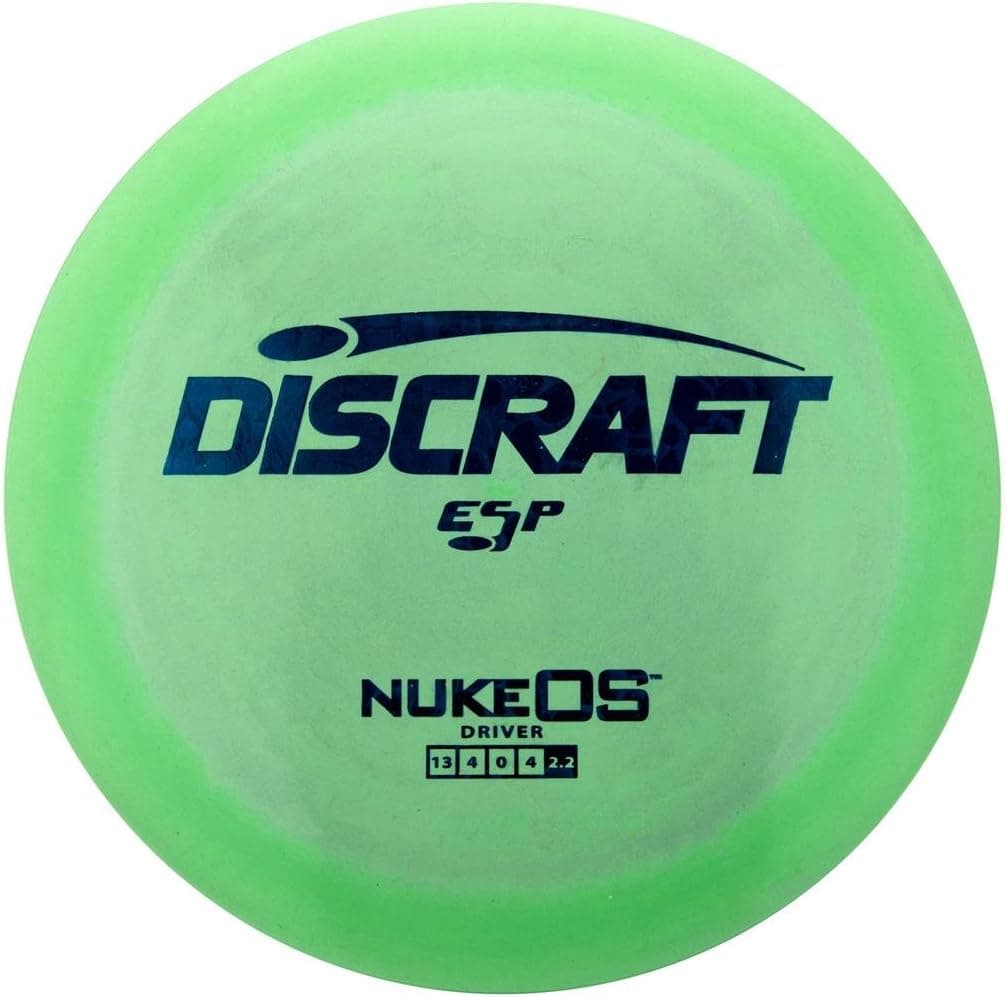
Discraft's ESP Nuke OS, an extra overstable Nuke for experienced throwers dealing with wind and hard fades.
Price range: See on Amazon
What we liked
- + OS version adds more fade than the standard Nuke for dependable lines
- + ESP plastic balances grip, durability and a consistent flight
- + 173-174g weight makes it a strong choice for headwind drives
Trade-offs
- - Needs a lot of power, or it drops out short with an early hook
- - Very wide rim can feel bulky for smaller hands on forehand throws
Built for power, not for learning
The Nuke OS carries flight numbers of 13 speed, 4 glide, 0 turn and 4 fade, making it one of the fastest, most overstable discs in Discraft's lineup. That combination rewards players who already have real arm speed, since a 13-speed driver needs a fast release to flatten out before the strong fade takes over. Advanced and pro-level throwers use it for headwind drives, spike hyzers and forehand flicks where a dependable, early fade is the goal rather than a flaw. Recreational players and anyone still working on distance will typically see the disc hook left almost immediately, landing well short of where a slower, more forgiving driver would land. If your throws do not regularly clear 300 feet, this is a disc to grow into rather than start with.
What the numbers and plastic mean
Speed 13 is about as fast as stock distance drivers get, glide 4 is on the lower side so the disc will not float once it slows down, 0 turn means it resists flipping over even on a hard, flat throw, and 4 fade delivers a strong, reliable hook back at the end of the flight. Discraft's spec sheet lists a diameter around 21.2 cm, a wide 2.5 cm rim, and a maximum weight near 174 grams for the OS version. ESP plastic sits between Discraft's grippier Z Line and its more premium Elite-X, described by the manufacturer as balancing tackiness with long-term durability. That wide rim is part of why the disc feels substantial in hand, but it also means smaller hands may need to adjust their grip compared with narrower-rimmed drivers.
Using it on the course
Owners and retailer flight guides describe the Nuke OS as a windproof option specifically for headwind shots and hyzer lines where other drivers turn over or fade too late. Because it needs real power to perform, several sources note that beginners find it extremely overstable and hard to get any distance from without sufficient throwing speed. ESP plastic holds grip in damp conditions reasonably well, which matters since this disc is often thrown in the wind and rain scenarios it is designed for. As with most overstable discs, expect the fade to soften slightly as the disc takes more hits over many rounds, which is normal wear rather than a fault. Store it away from prolonged heat exposure, the same care every plastic disc golf disc benefits from.
How it compares to other overstable drivers
Against the Prodigy 400G D1, another workhorse overstable driver, the Nuke OS runs a full speed class faster on paper and uses a wider rim, so it demands even more arm speed to flatten out, while the D1's lower-profile rim and slightly slower speed rating make it marginally more approachable for players still building power. Compared with the Innova Star Firebird, a longtime rival in windy-condition discs, the Nuke OS leans harder into pure overstability with its 0 turn and 4 fade, while the Firebird's rounder edge and Star plastic offer a touch more forgiveness on release angle. All three land in a similar score range, so fit comes down to how much power you can consistently generate.
Verdict and who should pass
The ESP Nuke OS delivers exactly what it promises: a dependable, wind-cutting fade for players who already throw with power and want a driver they can trust on the toughest holes. ESP plastic adds enough grip and durability to make it a long-term bag staple for that crowd. It is not the right choice for casual players, beginners, or anyone still developing distance, since the disc needs speed to open up rather than gliding out on its own. Those players will get more consistent results, and more fun, from a slower, more forgiving fairway driver, and can add the Nuke OS to the bag once their arm speed catches up to the disc.
Frequently asked questions
What are the flight numbers on the Discraft ESP Nuke OS?
13 speed, 4 glide, 0 turn, 4 fade, per Discraft's own flight chart for the OS version of the Nuke.
Is the Nuke OS harder to throw than the regular Nuke?
Yes. The OS version is built to be more overstable than the standard Nuke, which itself already carries turn and fade ratings suited to experienced throwers.
What is ESP plastic?
Discraft's grippy, durable plastic blend, positioned between the grippier Z Line and the more premium Elite-X plastic in the company's lineup.
Can a beginner throw the Nuke OS?
It is not recommended. Without strong arm speed the disc tends to fade out early and land short, so a slower or more understable driver will be easier to learn with.
Prices change often, so check the current price and availability on Amazon.
Check price on AmazonDisc Golf Nest may earn a commission from the link above.