Latitude 64 Opto Compass Disc Golf Midrange Disc, Stable Frisbee Golf Midrange, 170g Plus Review (2026)
Updated September 14, 2026 · Research-based review
Our verdict
Latitude 64's Opto Compass in the 170 gram plus weight class is a neutral midrange built for players who want a dependable straight line with only a gentle finish. The glossy Opto plastic keeps flight consistent over time, though it feels slicker than grippier plastics and this heavier copy can feel sluggish for developing throwers.
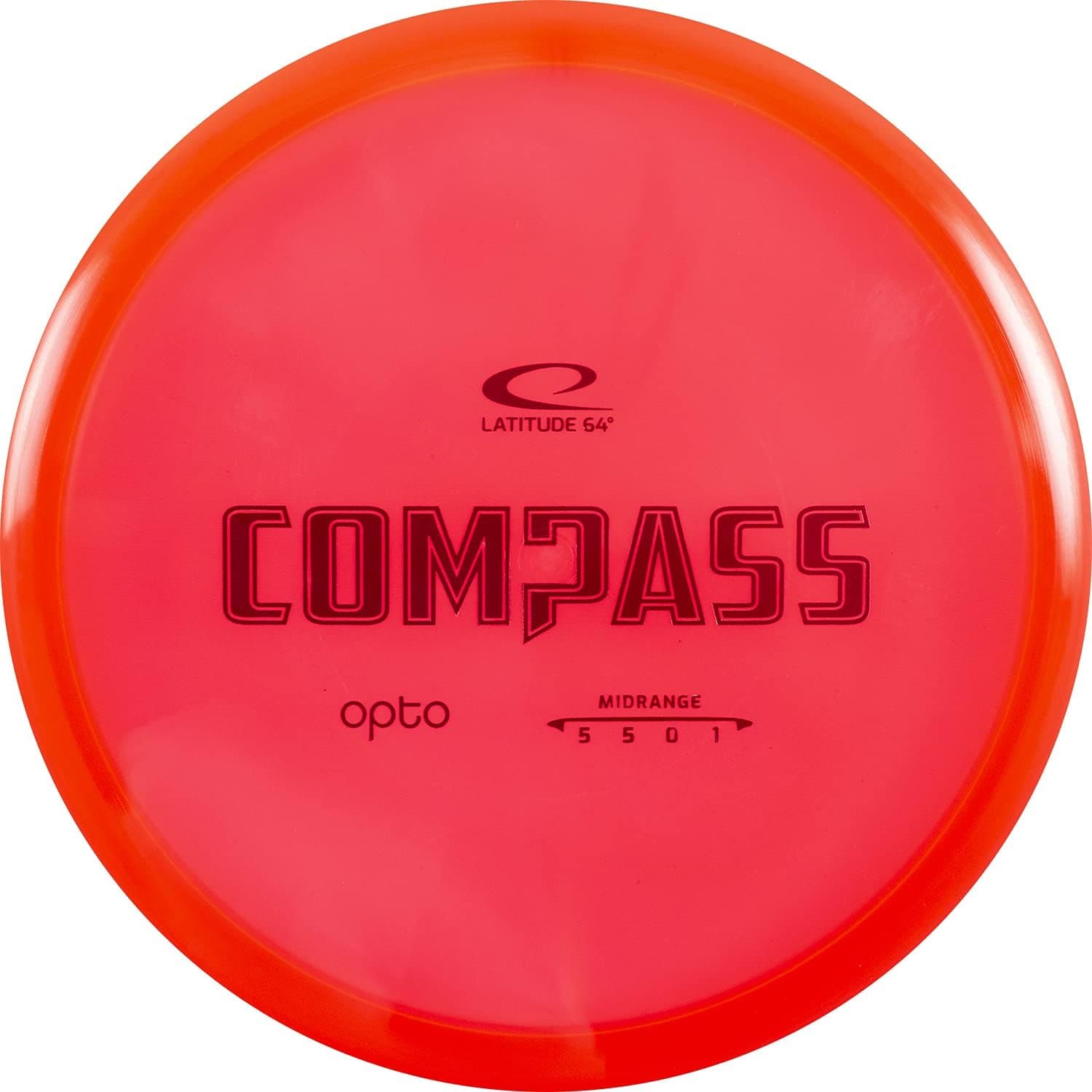
Latitude 64's Opto Compass at 170g plus, a stable midrange with a very straight flight and durable Opto plastic.
Price range: See on Amazon
What we liked
- + Compass is prized for flying straight with a controlled, gentle finish
- + Opto plastic is glossy and tough, so the flight stays consistent
- + 170g plus weights give a solid, steady feel in light wind
Trade-offs
- - Opto plastic can feel slick compared with grippier base blends
- - Heavier copies may feel sluggish for newer players' mid throws
Who the Compass is built for
Latitude 64 built the Compass for players who want a midrange that holds a straight line with very little argument, whether they are approaching a basket on a calm fairway or throwing a controlled shot through a gap in the trees. Its neutral flight numbers make it forgiving enough for developing throwers while still giving low anhyzer and hyzer release angles enough discipline to hold, which experienced players value for line control off the tee or on approach. This particular listing ships in the 170 gram plus weight class, Latitude 64's heaviest Compass option, giving it a steady, wind resistant feel rather than the extra glide a lighter copy offers. Players who want a midrange with more natural turn for longer, beginner friendly distance should look elsewhere in Latitude 64's line instead of the Compass.
Flight numbers, rim and plastic
The Compass carries flight numbers of 5 speed, 5 glide, 0 turn and 1 fade, a combination Latitude 64 markets as laser straight with a very gentle, predictable finish that holds whatever angle it is released on. It measures 21.6 centimeters across and uses a beadless rim, meaning there is no raised lip where the rim meets the flight plate, which gives a cleaner release for players who dislike the catch a beaded rim can create in the hand. This listing is molded in Latitude 64's Opto plastic, a premium, translucent blend the company positions as glossy and durable enough to keep its flight consistent over repeated rounds rather than wearing soft and turning over with age. The mold is PDGA approved for tournament play and ships in several weight classes, with this listing specifically covering the heaviest 170 gram plus range.
Throwing it and keeping the grip
On the course, the Compass rewards a controlled release more than raw power, holding a flat, straight line on a clean throw and finishing with only a gentle fade rather than snapping hard left at the end of flight, which makes it dependable for upshots and gap shots alike. The 170 gram plus weight in this listing adds stability in light wind compared with a lighter copy, though newer players whose midrange throws are still developing may find that same heft makes the disc feel a touch sluggish getting up to full flight speed. Opto plastic's glossy surface is part of what keeps the flight path consistent release after release, but that same gloss makes the disc feel slicker in hand than grippier base level plastics, something worth considering for humid rounds or sweaty hands.
How it compares with other midranges
Against the Discraft Z Buzzz, one of the most established stable midranges on the market, the Compass offers a similarly neutral, predictable flight but in Latitude 64's own Opto plastic rather than Discraft's Z line, so the choice often comes down to which brand's grip and glide feel better in hand. The Axiom Neutron Hex takes a different route with Axiom's proprietary Neutron blend and a slightly more overstable lean, which suits players who want extra fade insurance on windy approach shots. Dynamic Discs' Truth in Lucid plastic is a comparably priced, similarly stable option for players who prefer that brand's grippier surface over Opto's glossier finish. None of these rivals change the core appeal of the Compass, a straightforward, dependable line for players who want a midrange that does what it is told.
Verdict and who should choose differently
At our score of 8.9 out of 10, the Compass earns its place as a dependable, straight flying midrange, with the 170 gram plus weight in this listing adding stability for players who want a steady disc in light wind. Choose it if line control matters more to you than raw glide, or if you already like Latitude 64's Opto plastic and want a midrange that matches the rest of your bag. Choose the Discraft Z Buzzz or Dynamic Discs Truth instead if you prefer a grippier plastic surface, and look at a lighter Compass weight class if you are still building arm speed and find this 170 gram plus version feels sluggish on mid range throws.
Frequently asked questions
What are the Compass's flight numbers?
Speed 5, glide 5, turn 0 and fade 1, giving it a neutral, straight flight with only a gentle finish.
What weight class does this listing ship in?
This is the 170 gram plus class, the heaviest weight Latitude 64 makes for the Compass, which adds stability in light wind.
Does the Compass have a beaded rim?
No, it uses a beadless rim design, which gives a cleaner release without the catch some players feel with a beaded rim.
Is Opto plastic grippy?
It is glossy and durable, which keeps the flight consistent over time, but it feels slicker in hand than grippier base level plastics, especially in humid conditions.
Prices change often, so check the current price and availability on Amazon.
Check price on AmazonDisc Golf Nest may earn a commission from the link above.