Discmania C-Line DD3 Disc Golf Driver, Overstable Disc Golf Distance Driver (173-176g) Review (2026)
Updated September 20, 2026 · Research-based review
Our verdict
The Discmania C-Line DD3 is a fast, overstable distance driver in firm, durable C-Line plastic, built for strong throwers who want a dependable bomb-and-fade shot into wind or hyzer lines. It is not a forgiving disc for slower arms, and the stiff plastic can feel harsher in cold weather than a softer blend.
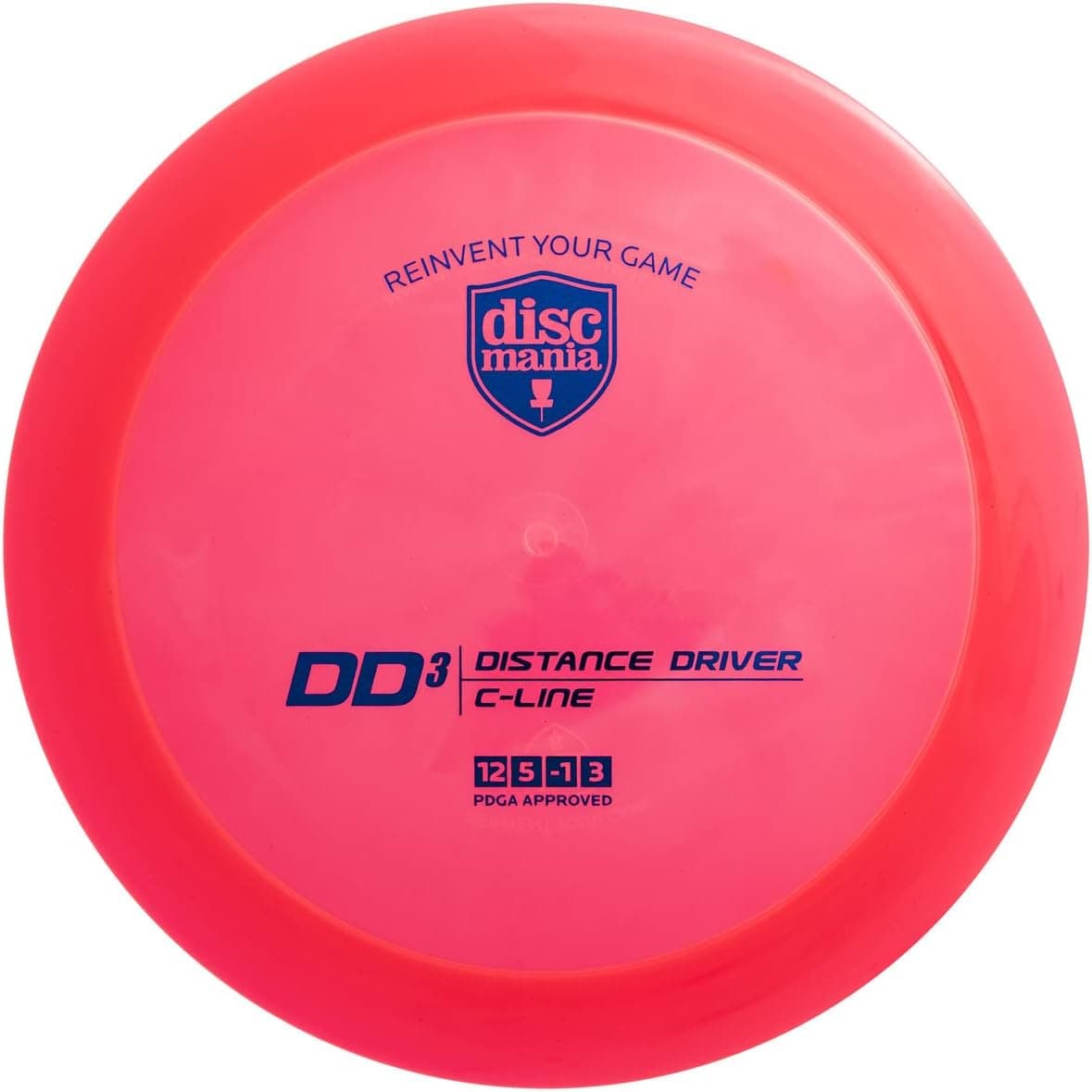
Discmania's C-Line DD3, an overstable distance driver at 173-176g for strong throwers who want dependable fade.
Price range: See on Amazon
What we liked
- + DD3 is a trusted overstable tool for windy holes and hard hyzer lines
- + C-Line plastic is tough, grippy and holds its stability well over time
- + 173-176g weight adds extra wind resistance on long, exposed tee shots
Trade-offs
- - Overstable, heavy build gives weaker arms short, early-fading throws
- - Stiff C-Line feel is less comfortable in cold weather than softer blends
Flight Numbers and Overall Shape
The DD3 flies at speed 12, glide 5, turn -1, and fade 3, according to Discmania's own specifications and third-party flight charts. That combination describes a fast, stable-to-overstable distance driver: it has a little high-speed turn to help it cut through the air on a big throw, but nowhere near enough turn to flip over into a flat or understable flight, and it finishes with a strong forward-pushing fade of 3. This is the classic bomb driver profile, built to hold a hyzer or flex line reliably rather than to glide out flat, which makes it a common choice for long, open holes where a predictable, overstable finish matters more than maximum straight-line float.
C-Line Plastic and What It Feels Like
This disc is molded in Discmania's C-Line plastic, described by the manufacturer as a firm, highly durable, translucent blend built for consistent flight performance over a long service life. Firm plastics like this generally hold their shape and flight numbers well through repeated hard impacts with chains, trees, and pavement, which matters for a fast distance driver that is likely to take a beating on long, aggressive throws. The tradeoff is grip and feel: C-Line's stiffness means less give in the hand than a soft, gummy plastic, and that stiffness is more noticeable in cold weather, when firm plastics tend to feel even harder and less tacky than they do in warm conditions.
Who Can Actually Throw This Disc Well
A speed 12 rating puts the DD3 near the top of the distance driver speed range, meaning it needs real arm speed to reach the flight described by its numbers. Thrown by a player without that speed, the disc will behave far more overstable than its numbers suggest, fading early and cutting distance short rather than extending it, which is a common frustration for less experienced players who pick up a fast driver expecting beginner-friendly results. Strong, more advanced throwers are the ones who benefit most from this mold, since they can generate enough speed to let the slight turn show up before the fade takes over, producing the long, controlled S-curve or hyzer-flip shots the disc is designed for.
Best Use Cases on the Course
Because of its strong fade and stable-to-overstable shape, the DD3 is well suited to windy, open holes where a flippier or less stable driver would get pushed off-line, since heavier fade and reduced turn generally hold a line better against crosswind and headwind. It also works well for players who prefer to shape shots on a hard hyzer angle and let the disc's natural fade bring it back toward the target, rather than relying on a flatter, more neutral flight path. Players who mostly throw straight, flat shots on wooded, wind-protected courses may get less practical benefit from this particular flight shape than someone playing more exposed, open layouts regularly.
Should You Add This to Your Bag
The DD3 is a solid pick for intermediate to advanced players who want a dependable, wind-resistant distance driver and are comfortable working with a firmer, less grippy plastic in exchange for long-term durability. It is a demanding disc for beginners or players with slower arm speed, who are more likely to get short, early-fading throws out of it rather than the extended flex lines it is capable of in stronger hands. Anyone deciding between this and a similarly rated driver in a softer plastic should weigh how much they value chain durability and long-term flight retention against a grippier, more comfortable in-hand feel, since that tradeoff is really the core decision with C-Line plastic.
Frequently asked questions
What are the flight numbers for the C-Line DD3?
It flies at speed 12, glide 5, turn -1, and fade 3, making it a fast, stable-to-overstable distance driver.
Is the DD3 good for beginners?
Not really. Its speed 12 rating requires solid arm speed, and slower throws tend to come out overstable and fade early rather than reaching full distance.
How does C-Line plastic feel compared to softer blends?
C-Line is a firm, durable, translucent plastic. It holds up well to impacts but has less grip and can feel harder in cold weather than a soft plastic.
Is this a good disc for windy courses?
Yes, its stable-to-overstable flight and reliable fade make it a solid choice for holding a line in wind compared with flippier, less stable drivers.
Prices change often, so check the current price and availability on Amazon.
Check price on AmazonDisc Golf Nest may earn a commission from the link above.