Latitude 64 Opto AIR Sapphire Distance Driver Golf Disc Review (2026)
Updated September 14, 2026 · Research-based review
Our verdict
The Opto AIR Sapphire is built for players who cannot generate much arm speed yet, turning a long, floating flight path into easy distance. It excels on open fairways but drifts badly in crosswinds, so gusty days and tight wooded holes are its weak spots.
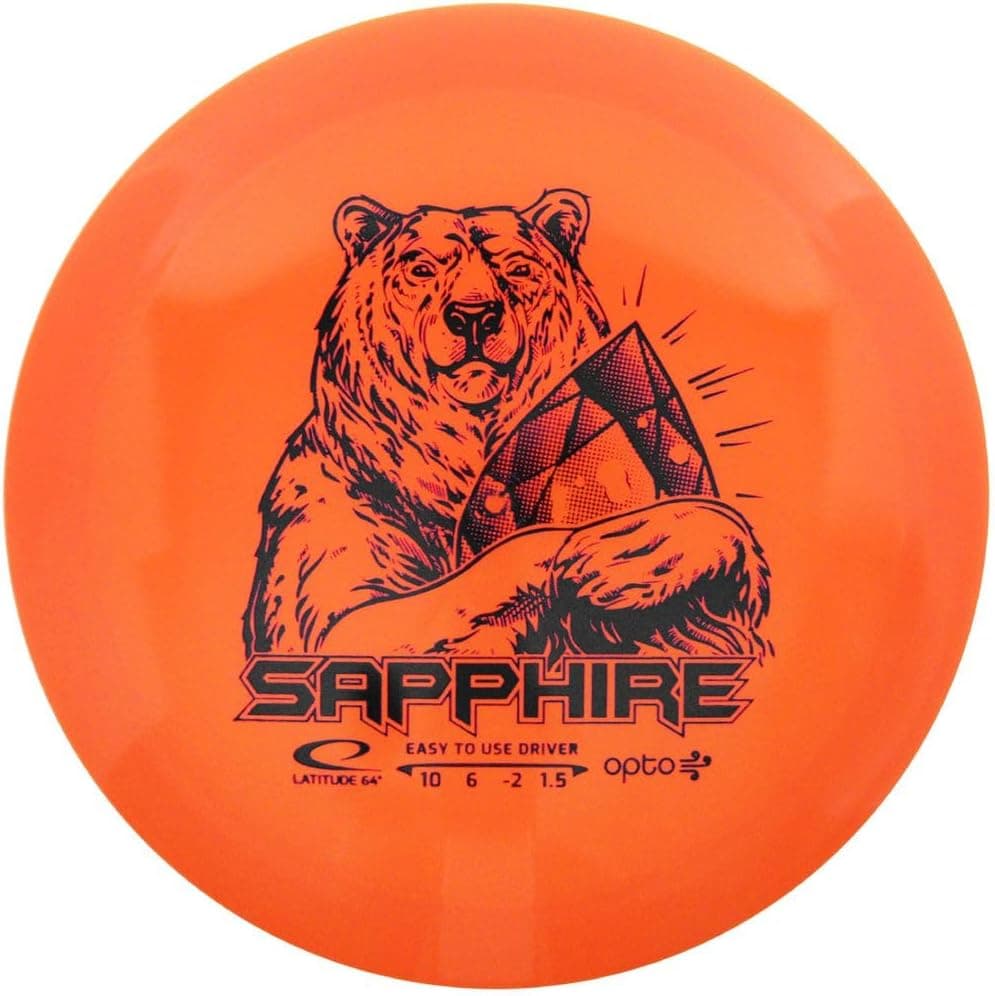
Latitude 64's Opto AIR Sapphire, an understable driver in extra-light Opto AIR plastic for maximum carry at slow speeds.
Price range: See on Amazon
What we liked
- + Opto AIR plastic cuts weight so slow arms can throw noticeably farther
- + Sapphire's gentle turn and glide produce long, floating drives
- + Premium Opto blend is tougher than most lightweight budget plastics
Trade-offs
- - AIR weights are very sensitive to wind and can drift off line quickly
- - Floats high and slow, which can be awkward on low, tight wooded holes
Who This Driver Is Built For
Latitude 64 designed the Opto AIR Sapphire around one goal: helping players with slower arm speeds push a disc further without extra effort. The Sapphire mold itself is an understable distance driver, and putting it in the AIR version of Opto plastic strips extra grams out of the disc so a gentler release still carries the rim through a full flight. That combination makes it a natural fit for new throwers, juniors, or anyone whose drives currently stall out short of 300 feet. Manufacturer specs list the disc in roughly the 155 to 159 gram range, lighter than a standard 173 to 175 gram driver, which is the whole point of the AIR line. Players who already throw hard should look elsewhere, since a fast arm will simply turn this disc over into the ground rather than let it finish its intended arc.
Flight Numbers and Plastic Explained
According to Latitude 64's own product page, the Opto AIR Sapphire carries flight numbers of 10 speed, 6 glide, -2 turn, and 1.5 fade. The high glide number is what produces the long, floating carry the disc is known for, while the -2 turn means it will bank gently to the right for a right-hand backhand thrower before settling into a light fade at the end. Latitude 64 describes the rim as a slim, manageable profile that suits a wide range of hand sizes, not just large hands used to gripping bigger 10-speed drivers. Opto AIR plastic uses the same base blend as standard Opto but runs through a modified process that builds in microscopic bubbles, trimming weight while keeping the plastic's durability and grip similar to the full-weight version, according to the manufacturer.
Living With an AIR Weight Driver
Lightweight discs like this one behave differently in the bag and in the air compared with standard plastic. Because so little mass is carried through the flight, wind has an outsized effect, and the same gust that barely nudges a 175 gram driver can push an AIR disc well off its intended line. Owners choosing an AIR weight driver for low power should plan on calmer conditions or tighter tree lines to get consistent results, and should expect the disc to hold up high and glide for longer than a heavier mold before it finally drops and fades. Care is straightforward: rinse off dirt and grit after wet rounds and store it out of direct heat, since thin-walled lightweight plastic can warp faster than a full-weight disc left in a hot car.
How It Stacks Up Against Rivals
In a lineup built specifically for low arm speed throwers, the Opto AIR Sapphire lands in the middle of the pack. Dynamic Discs' Lucid AIR Escape scores a touch higher thanks to its more predictable fairway-driver flight, while Prodigy's AIR Spectrum F5 sits at the same overall score with a slightly straighter, less turn-heavy line for players who want fewer surprises off the tee. Compared with both, the Sapphire's bigger turn and glide numbers make it the better choice specifically for distance off a flat or slightly hyzer release, but it is also the pickiest about wind of the three. Discraft's X Heat and Innova's Star Mamba round out the category with more neutral, standard-weight options for players who want predictability over maximum carry.
Final Verdict
Given the site's own score of 8.4 out of 10, the Opto AIR Sapphire earns its rating as a purpose-built distance tool for a specific kind of thrower. If your drives currently fall short because of arm speed rather than technique, the light weight and generous glide genuinely add yards with less physical strain. Just temper expectations on breezy days, since the same lightness that helps distance also makes the disc harder to control in wind, and skip it if most of your rounds happen on tight, low-ceiling wooded courses where a floating flight path works against you. Faster throwers or course styles that reward accuracy over raw carry are better served by a standard-weight fairway driver instead.
Frequently asked questions
What are the flight numbers on the Opto AIR Sapphire?
According to Latitude 64, it flies at 10 speed, 6 glide, -2 turn, and 1.5 fade, making it an understable distance driver with a long, gliding flight path.
How much does the Opto AIR Sapphire weigh?
Latitude 64 lists it in roughly the 155 to 159 gram range, noticeably lighter than a standard 173 to 175 gram driver.
Is the Opto AIR Sapphire good in windy conditions?
Not really. Its light weight makes it more sensitive to wind drift than standard-weight discs, so it performs best on calmer days or sheltered fairways.
Who should avoid this disc?
Players with faster arm speeds will tend to turn it over past its intended line, and it can float awkwardly on tight, low-ceiling wooded holes.
Prices change often, so check the current price and availability on Amazon.
Check price on AmazonDisc Golf Nest may earn a commission from the link above.