Discraft X Heat Distance Driver Golf Disc - 160-166g Review (2026)
Updated September 21, 2026 · Research-based review
Our verdict
The Discraft X Heat is an understable distance driver in the budget-friendly X Line plastic, weighted at 160-166 grams for slower arm speeds. It is a solid pick for newer players chasing easy turnover distance, but the flip-and-burn flight and softer plastic mean it is not built for headwinds or players who already throw hard.
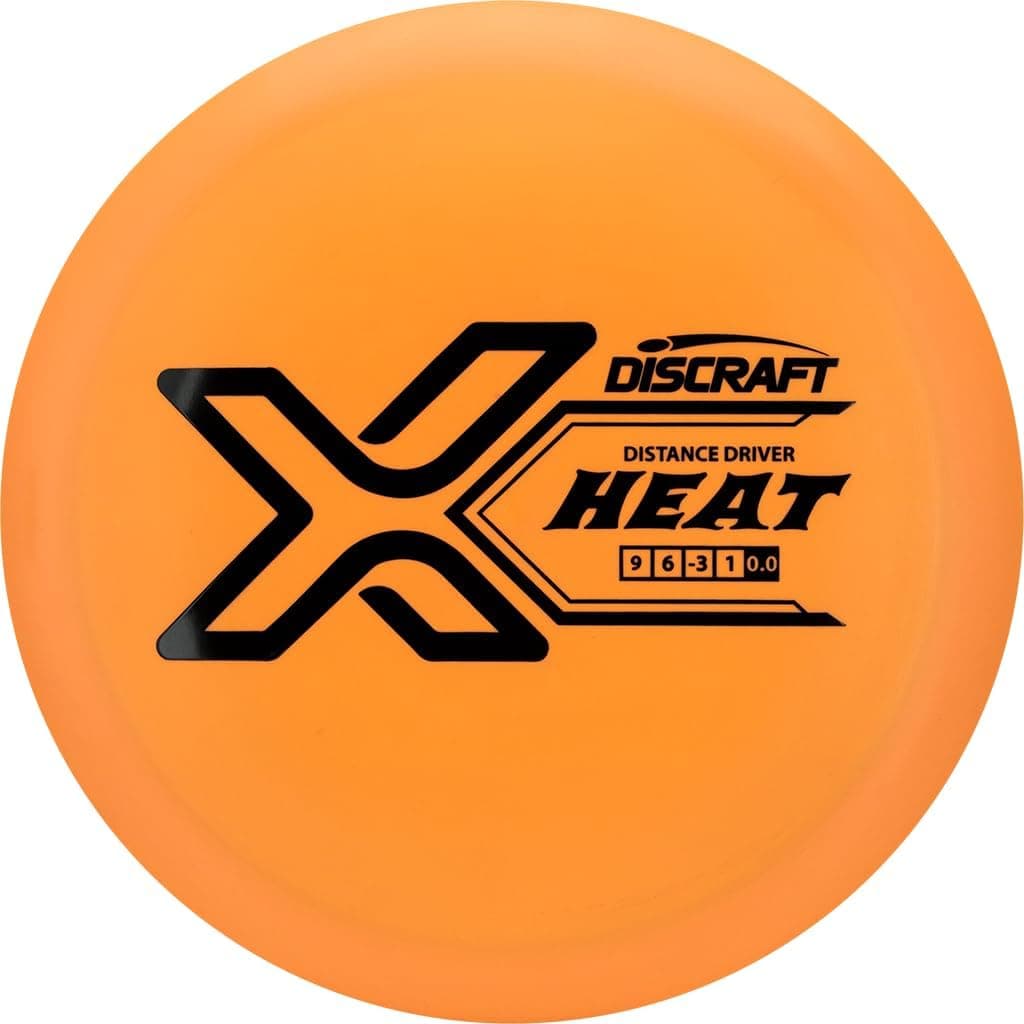
Discraft's X Heat at 160-166g, an understable distance driver in X plastic built for beginners and slow arm speeds.
Price range: See on Amazon
What we liked
- + Heat turns and glides easily, helping new players throw longer drives
- + X plastic sits between base and premium blends for durability and grip
- + 160-166g range gives enough weight for control without tiring the arm
Trade-offs
- - Understable flight is not reliable into a headwind or for big arms
- - X plastic still wears faster than Discraft's premium Z or ESP lines
What it is
The Heat is one of Discraft's long-running distance drivers, originally developed from a 2014 Ace Race prototype, and this listing is the X Line version at a 160-166 gram weight. Discraft rates it with flight numbers of speed 9, glide 6, turn -3, and fade 1, which puts it firmly in understable territory: it wants to turn over and flatten out or roll into a slight roller rather than hold a straight or overstable line. That flight profile, combined with a smaller rim built for easier grip, is why Discraft and retailers position the Heat as a driver for newer or developing players who do not yet generate the arm speed to get more overstable discs to fly correctly.
Fit for the job
For a player working on distance who cannot yet control a fast, overstable driver, the Heat does the job it is designed for: the strong turn and high glide let a lighter or slower arm speed carry the disc out and let it finish with a gentle fade rather than dumping hard to one side. That same profile works against it for anyone with more power, since a fast arm speed will just push the disc further into turnover territory, turning what should be a controlled shot into an unwanted roller. Headwinds are also a weak spot, since understable discs like this one tend to get knocked off line or flip past straight when fighting into the wind rather than holding a hyzer.
Features and specs
Discraft lists the Heat's flight numbers as speed 9, glide 6, turn -3, fade 1, and the standard disc diameter is about 21.1 centimeters with a 1.9 centimeter rim width and 1.2 centimeter rim depth, dimensions shared across most Discraft distance drivers. This particular listing covers the 160-166 gram weight range, which is lighter than the disc's maximum of roughly 175 grams and generally easier for players with less arm speed to get up to full flight speed. The rim is intentionally sized for comfortable grip rather than maximum speed, which lines up with Discraft's own positioning of the mold as an accessible, beginner-friendly driver rather than a tournament distance disc.
Build and materials
This version comes in Discraft's X Line plastic, a mid-grade blend that sits above the company's base-level plastic but below premium lines like ESP, Z, or Titanium. Discraft describes X Line as offering good grip, including in wet conditions, and more consistent flight over time compared to base plastic, while still being priced as an entry-level material. That means the disc will season and beat in a bit faster than a premium-plastic driver would, gradually turning even more understable as the plastic wears, which can be useful for a player who wants the disc to keep flipping over time but is a downside for anyone hoping the flight will stay consistent for years of play.
Value for money
As an entry-level distance driver aimed squarely at beginners and players with slower arm speeds, the Heat in X Line plastic is priced accordingly and delivers what that audience needs: an easy-to-turn-over disc that helps build distance without demanding a lot of power. It is a poor value pick for advanced players who already own more overstable, premium-plastic drivers, since the Heat's flight and plastic durability will not hold up to aggressive throws or long-term use at a high arm speed. For its intended buyer, a new or developing player building a first set of drivers, it is a reasonable, low-cost way to get turnover distance without paying premium-plastic prices.
Frequently asked questions
What do the Heat's flight numbers mean?
Speed 9, glide 6, turn -3, fade 1 makes it a fast but understable driver that wants to turn over and flatten rather than hold a straight or overstable line.
Is X Line plastic durable?
It is a mid-grade blend, more durable than Discraft's base plastic and grippy even when wet, but it wears and seasons faster than premium lines like ESP or Z.
Who should buy the 160-166 gram Heat?
Newer players or anyone with a slower arm speed who wants an easy-turning driver to build distance, rather than players who already throw with high power.
Does the Heat handle wind well?
Not especially. Its understable turn makes it prone to flipping or rolling in headwinds, so it performs best in calm conditions or with a tailwind.
Prices change often, so check the current price and availability on Amazon.
Check price on AmazonDisc Golf Nest may earn a commission from the link above.